April in my Pacific Northwest (PNW) Garden

The spring garden is thriving this month. Perennials are coming up while spring bulbs are in their prime in April. While the tulips and daffodils started winding down their show around mid April, there are other beautiful things to enjoy around the garden. Last October, I planted a combination of Minnow daffodils and Muscari around the circle flower bed in the side yard and it looked beautiful this year. I am going to repeat this combination in other parts of the yard.

The sweet pink rhododendron has a story to tell. I grew it from a cutting from the garden of my last house. It was a 12″ rooted plant that I brought along to its new home and is largely neglected. I do fertilize it once every spring and then leave it alone for the rest of the year – never even providing any supplemental water. This is the first year that it is blooming so profusely. Such a happy sight it was when I came back from a Florida/Bahamas trip in early April and saw it filled with flowers!

Primrose “Wanda” has formed a wonderful border around the front yard. Iberis (CandyTuft) looks like a white carpet around the edges of several parts of the garden. In my opinion, Peony foliage are a sight to behold. Their upright, foliage looks so pretty and adds a wonderful texture in the spring garden. How are hellebores still looking pretty? Thats four months of beautiful colors! I certainly need to appreciate them more! The backyard cleanup has started – though it is a never ending cycle and I have a lot more to do. Mr. Ducky looks happy with tulips blooming behind him and the red Candelabra Primrose (Primula Beesiana) is blooming strong!

The seedlings that I started indoors are thriving! Except the peppers. They germinated but are still so little with only a set of true leaves. I hope these will grow better and faster. I need to do more research on how to grow peppers from seeds better. The basil seeds are also very slow to germinated. The tomato plants are so big now and already setting buds. I think it will be best to remove the buds before planting them in the ground – but I have not had the heart to do that yet. I will remove them before I plant.

One of the major changes to the outdoor areas this month is the extended patio. Its not that we needed a bigger patio, but it was needed to keep this area weed free and making sure this area is usable. Now that the patio is bigger, it looks much better given the large scale of the backyard.

Chores I tended to in the garden this month are:

  • Cleaned up the ferns along the narrow side yard. Taking care of Ferns are easy! While this is not necessary, they look their best with a little spring cleanup which entails removing last years leaves being careful not to cut the emerging fronds.
  • Removed the weeds as much as I could. Over the years, learnt that I can’t have a weed free garden and not to be too tied up cleaning weeds.
  • Pruned off the dead from two of my roses. Sadly, I might have lost the David Austin Winchester Cathedral rose. It had a lot of dead branches and when I removed them, I was left with barely any green. I am sad since it was the first David Austin rose I owned. However, it gives me an opportunity to add a new rose.
  • Added some mulch in the dahlia bed. I didn’t mulch the whole bed since firstly I ran out of mulch and secondly I want to wait for my dahlias to emerge.
  • Tended to the growing seedlings and also sowed the annuals – marigolds, cosmos, basil, nasturtiums, zinnias, coriander and allysums. The cosmos and marigold are ready to be planted outside after hardening off.
  • The irrigation system is now plugged in and primed.
  • Added compost to the veggie patch and the veggie containers.

Highlights of the April garden are captured in this video:
March Garden in Pacific Northwest (PNW)

This month is the busiest time in the garden. The spring flowers are starting to bloom, perennials waking up from their winter slumber and most of all seed starting for summer annuals and vegetables. The weather has been mostly mild and reached a high of 70F two days this month and did not dip below 40F. I feel spring is when my garden looks its best and I try to make sure that the clutter is removed and I “juzz” up the garden for the spring show.

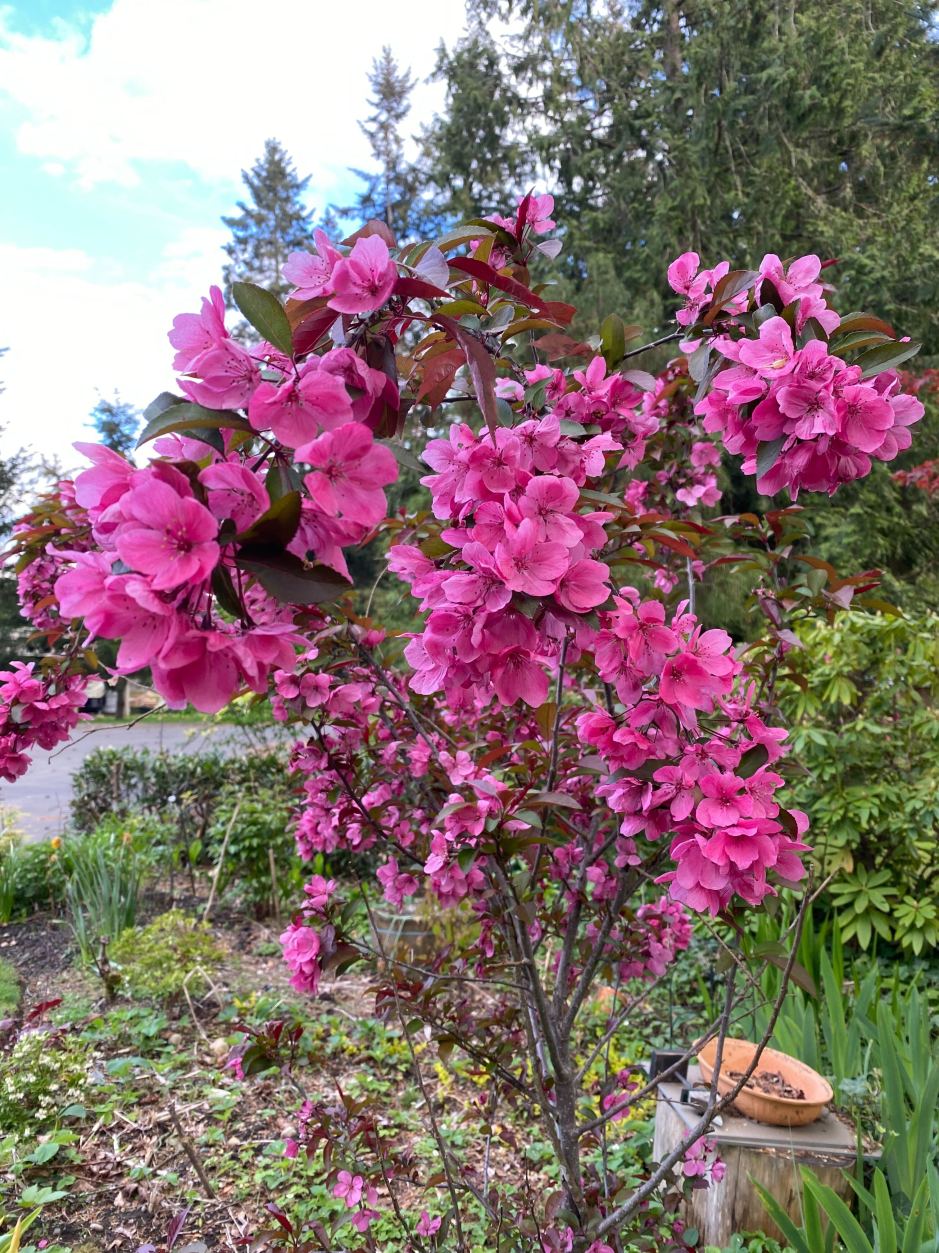
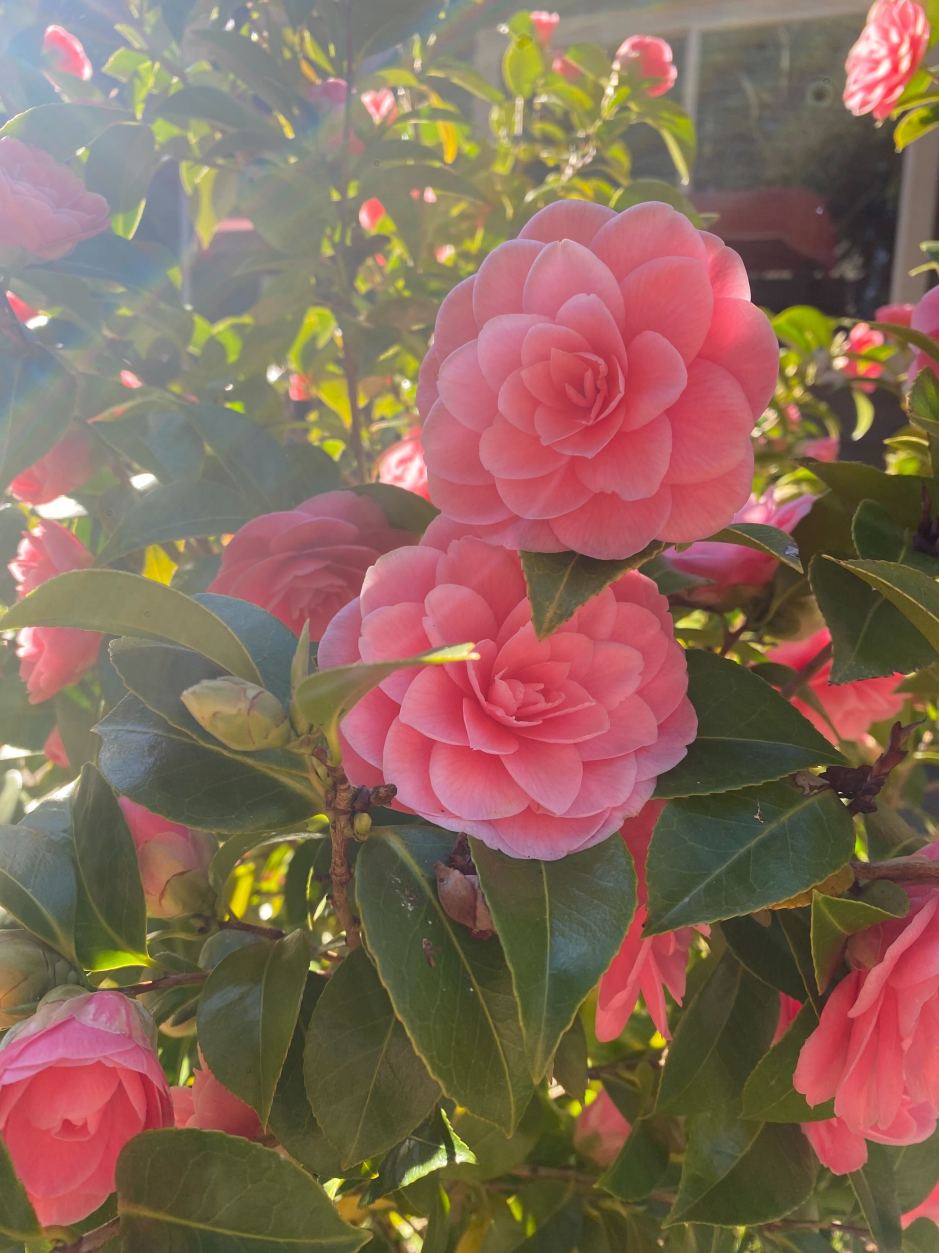
The garden has lots of flowers this time of the year. Every day some new spring flowering bulbs start blooming – hyacinths and daffodils are already glorious, but the Red Devon Daffodils which are the late blooming variety are just starting to bloom. I just love primrose “Wanda” which I have been growing for many years now. It forms a lovely border around my front flower bed. I also divide them and it is now beautifully flowering in other parts of my garden. The camellia tree has exploded with stunning flowers and the two Japanese Plum trees are also so full of flowers. The hellebores are still looking beautiful – I feel they are the longest blooming plants! The Red Currants (Ribes Sanguineum) are starting to flower and I can’t wait for the hummingbirds to start visiting her! That truly makes my day!

An interesting anecdote about one of my trees. A gardening friend had given me a small tree which was 12″ tall 6 years ago when she had given to me saying that it was a seedling of a plum tree. I planted the then tiny tree and it grew tall every year but did nothing else. It is now approximately 20 feet tall but was not producing any flowers or fruits. I was growing frustrated with this tree and thought I will remove it if there are no flowers or fruits this year. Well, guess what – this one has beautiful flowers now!! I asked the local gardening group and they identified it as an American plum. How exciting is that!! I am looking forward to observing what the tree does in the coming months and years. Hopefully I will get plums soon!

I wanted to increase the depth of the raised veggie bed from 2″ to 6″. Keshav helped me with this and now I am happy that the veggie bed is 6″ deeper. I filled this bed with raised bed mix and sowed peas and beets so far. I also sowed 6 peas in the barrel.

March is when I sow most seeds that I want to start indoors and so the number of seedlings I have to take care of indoors increases. I am always amazed that dahlia seeds germinate so fast!! 3 days after sowing, the seeds germinate and start growing!

Garden Chores this month:

  • Planted ranunculus and anemones in the front flower bed after pre-sprouting. They are still very small but growing well.
  • Started applying mulch after cleaning the dahlia bed.
  • Sowed dahlia seeds indoors which are now growing nicely under grow lights
  • Snapdragons, swiss chards, and beets seedlings are growing well too.
  • Tomato seedlings look so big and strong!

Highlights of the garden in March are captured in this video:

February in my PNW Garden

We rolled into February with hope for warmer weather and a pile of gardening chores. But first, it was so exciting to see the Iris Reticulata start to bloom as soon as the new month began!

Hellebore blooms are still going strong! Its amazing how long these lasts. I already cleaned up the older leaves, and the flowers look much better now – but still not as “flashy” as I would like. A little confession – though I appreciate the early blooms and the long lasting flowers, I am not sure that I love the hellebores too much. They remain very close to the ground and seem to disappear into the surroundings unless I peer close to them – even though I have 4 of them in my backyard. . They are expensive plants, so planting en masse is not an option for a thrifty gardener like me. I am on the look out for a very early blooming, deep shade plant that will lift the winter spirit.

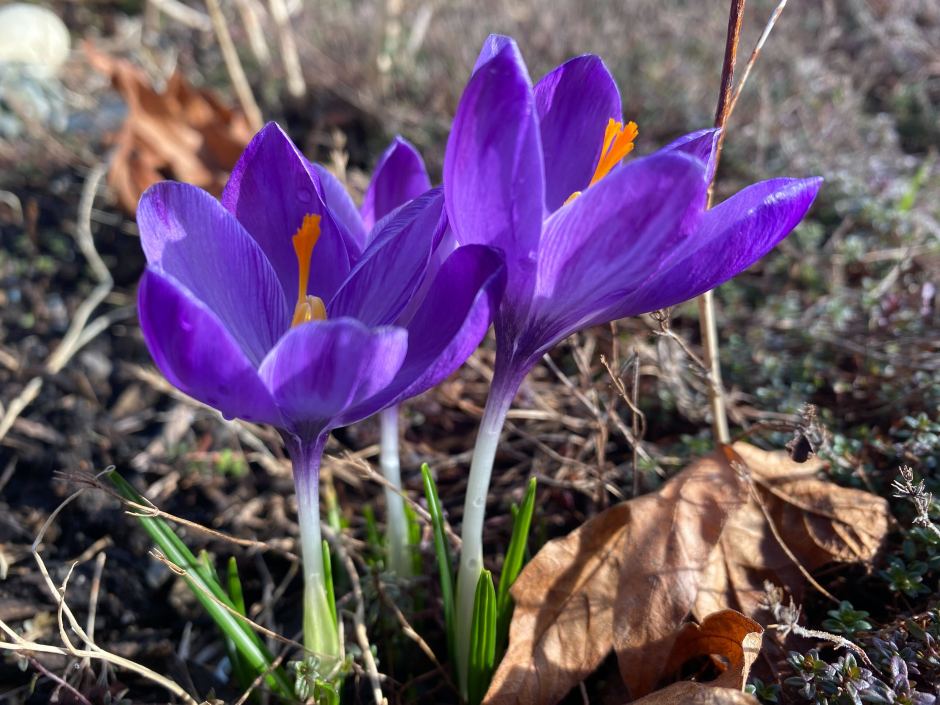
The crocuses have started blooming too! These are very attractive to rabbits, so I truly treasure the few that manages to bloom in the garden. The ones that I planted in pots are strangely still not blooming. There are a few daffodils starting to bloom but I am waiting for the main show. My favorite pink camellia has started to flower but then again, the full display is eagerly awaited. Same with Primrose Wanda – I overlook this hardy, beautiful primrose but it adds the pop of color just at the right time. I have them as a border in my front yard and also all around the garden.

On the house plant front, the Thanksgiving cactus is flowering again! I missed the flush of bloom during Thanksgiving time as I was vacationing in India, so I am thrilled to see some flowers now. The African Violets I bought last month are still in flower. So happy to see the long life of these beautiful flowers. I forced some forsythia branches to bloom indoors. I love the bright yellow flowers this time of the year which are also very appropriate for Saraswati Puja. If you want to know the process I use to force branches indoors, you can review my post on this.

The tomato seeds (Beefsteak variety) I sowed on 1/21 have germinated and doing well. They even grew tall enough and I repotted them into bigger pots. However, the pepper seeds (Hot Portugal variety) did not germinate. They seeds were very old and I think they were not viable.

Garden chores completed this month:

  • Cleaned up the two front yards.
  • The flower beds in the front yard now has nice, crisp edging – thanks to Anselmo who helped me with that.
  • Hydrangeas and roses pruned.
  • Hydrangeas fertilized.
  • Started the pre-sprouting process for Ranunculus and Anemones.
  • Sowed Swiss Chards seeds indoors on 2/6. Only one out of 6 germinated. I think I am wasting my time on the old seeds.
  • Spinach seeds sowed indoors on 2/6. No germination on this at all. I will try growing them as micro greens before discarding the seeds.
  • Sowed Apple Blossom Snapdragon seeds indoors on 2/27.

A short video encapsulating the February Garden is below:

January Garden in the Pacific Northwest (PNW)

This month exposes the stark reality of the garden. The clutter, the weeds and the lack of structure in the garden. Amidst all of these, I found a couple of the hellebores blooming! I also noticed that one hellebore that I planted in the front yard is not there anymore. I never lost a hellebore before and so I am really surprised and at a loss for what could be the reason. 

Just as my indoor space, I don’t like clutter in the garden at all. This month I can clearly see that I have accumulated a lot of pots, planters, and knickknacks in the garden. I am keeping a mental note of getting rid of these things as much as I can. The temperature is quite low for me to venture out too much these days – it might also be because I am not sure what to discard. While I enjoy the randomness of the cottage garden, I still like clean lines. This month I stepped into the garden after exactly two and half months and the first thing I noticed is that the garden is looking extremely unruly with the debris from last growing season. I have not done any fall cleanup last year. Over the years I learnt how some garden debris is beneficial for insects and worms. However I don’t like how the garden looks with all the dried leaves, and debris strewn around the garden. So I started cleaning up the garden this month.

During a quick walk around in the front yard I saw that the daffodils planted in the previous year’s are coming up. The muscari (grape hyacinths) and ranunculus (planted last year) have come up strongly as well. These got a little beaten up during the cold front that hit us mid January (lowest temperature where we are was 14F). I hope these recover and bloom. The plants that are still looking good apart from the boxwoods, camellia and cypress are the yucca, the potted lavender and surprisingly the Erysimum (Bowles Mauve). Some of the snapdragons are still standing tall. I love snapdragons so much!!

I am never satisfied with the amount of spring flowering bulbs I plant. I planted quite a few daffodils, muscari in the front yard and tulips in pots in October last year. Since I was away the last two months of last year, I asked a friend to buy me some discounted bulbs. I started the year with planting a few daffodils, crocuses and Iris Reticulata in pots on 1st January. At the same time, I also planted 4 purple sensation alliums in the front yard. Planting so late will be an experiment for me this year. Looking forward to seeing how the late planted bulbs do.

This is the fourth year since I started winter sowing. I grow at least a few plants this way each year. This year I sowed White Coneflower (sourced for the first time from Amazon) and Nigella seeds on 2024-01-09. The process is so simple and for the right seeds, the results have been great for me. If you want to know more about the process, check out the post I had written earlier.

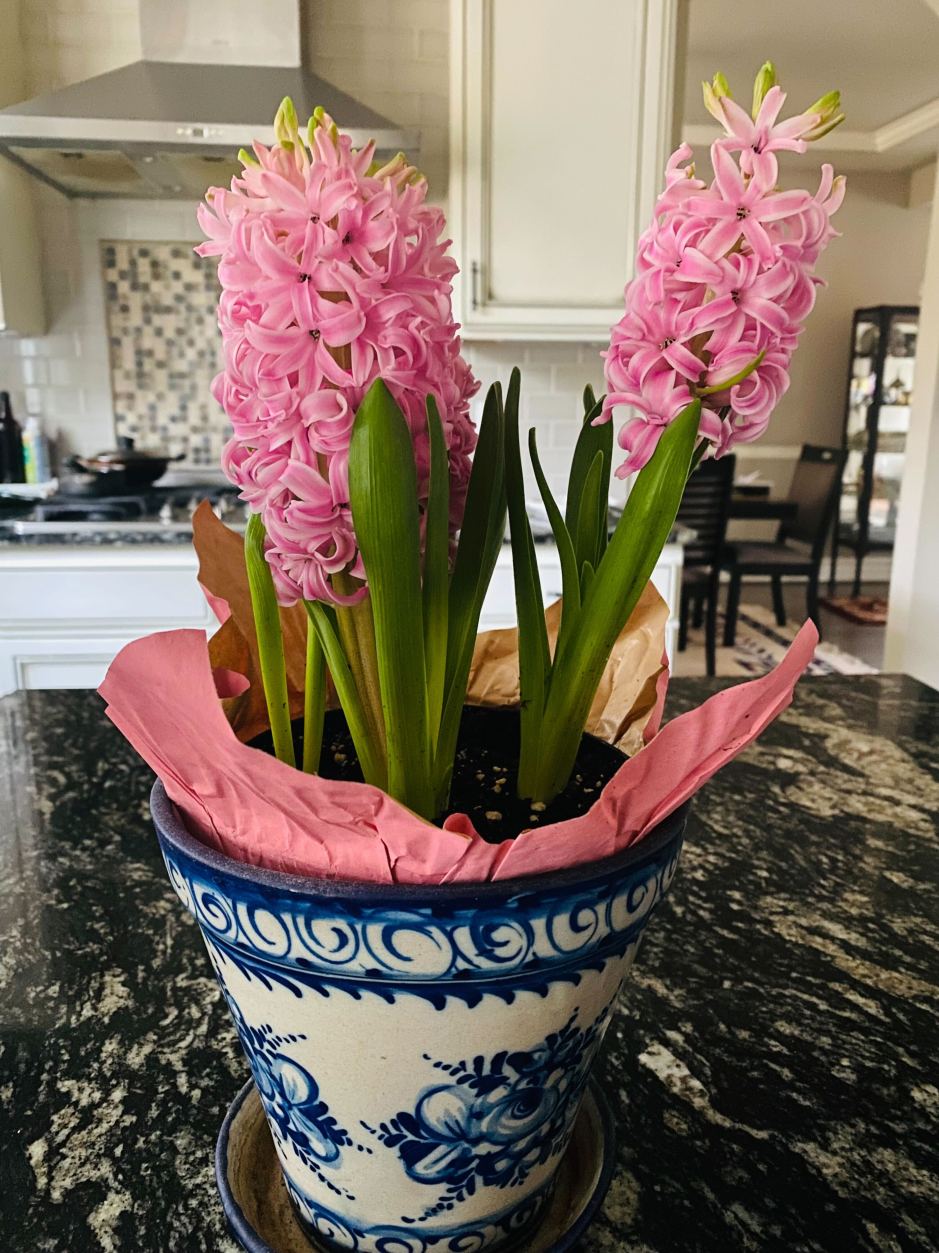
January is a month when the itch to garden and see some color gets very real. And this is the time when a potted, forced flowering bulb display truly comes to the rescue. So of course I couldn’t resist the gorgeous pink hyacinth flowers from Trader Joe’s. I also bought myself a beautiful bi-colored African Violet which I was looking for.

January Garden Chore list that I checked off:

  • Began the general garden clean up including grooming the Hellebore leaves.
  • Weeding. Of course it will continue through out the year
  • Winter sowed white coneflower and nigella on 1/9.
  • Started tomatoes and broccoli seeds on 01/21. The tomato seeds already germinated on 01/28.
  • Expanded the dahlia bed (yet again!) by ~1 foot. It is a no till bed with cardboards underneath. So it was a low effort job!

You can watch a short tour of my garden this month in the video below:

Winter? “Sow” be it..

Winter sowing is the technique of growing plants from seeds sown in winter to give them a head start in spring. As any gardener who has ever struggled with a self-seeding plant knows, some seeds do very well when left outdoors in the cold all winter. The seeds that does well in this technique are the ones that need to experience cold, damp conditions either because they have hard shells that are softened by the freezing and thawing or because they are triggered by the change in temperature to sprout. This is called stratification. 

So, how is “winter sowing” different than “self sowing? Winter sowing essentially provides a mini greenhouse environment to control the germination of seeds within the boundaries of the container it is sowed in. A quick internet search told me that the phrase “winter sowing” is attributed to Trudi Davidoff, a resourceful gardener who had more seeds than indoor space. Ms. Davidoff sows seeds in covered containers (she uses take-out containers with foil bottoms and plastic tops) and then moves the containers outdoors. The containers act as mini greenhouses, allowing the seeds to experience the chill of winter in a controlled environment. When the temperature warms enough, the seeds germinate and start to grow. I learnt about this technique in the last few months and wanted to give it a try. I sowed Tiger Paw Asters, Monarda (Bee Balm), and Lupine seeds. I am eagerly waiting to see if I am successful in this process. I won’t write about the step by step process I followed, instead I am linking the video here:

My first experience with winter sowing

I will provide an update on this experiment in spring. So make sure to follow me here or in my social media accounts.