
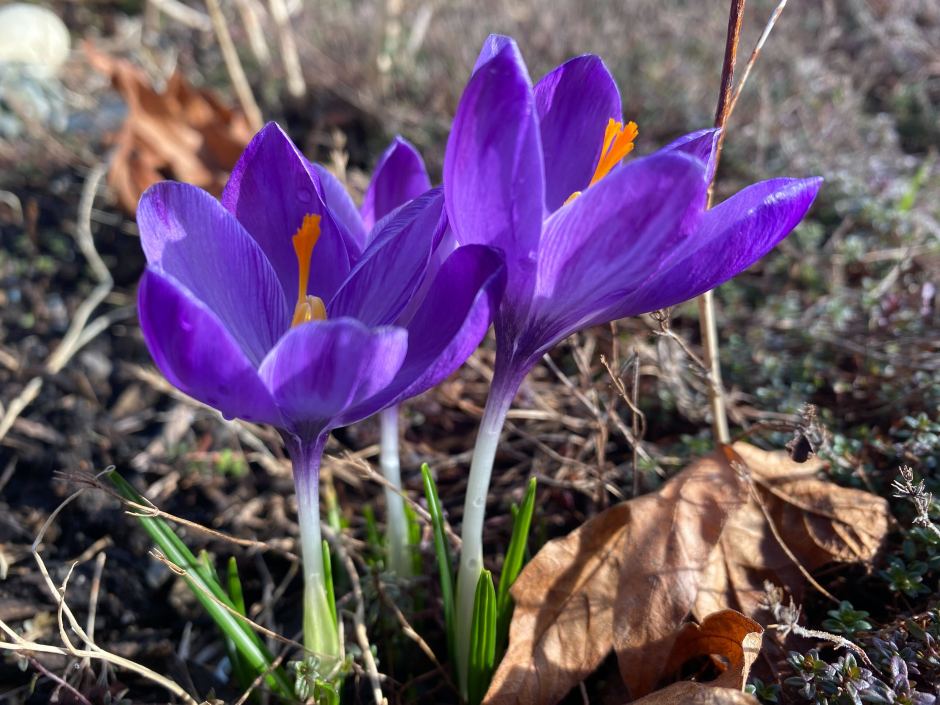
We rolled into February with hope for warmer weather and a pile of gardening chores. But first, it was so exciting to see the Iris Reticulata start to bloom as soon as the new month began!
Hellebore blooms are still going strong! Its amazing how long these lasts. I already cleaned up the older leaves, and the flowers look much better now – but still not as “flashy” as I would like. A little confession – though I appreciate the early blooms and the long lasting flowers, I am not sure that I love the hellebores too much. They remain very close to the ground and seem to disappear into the surroundings unless I peer close to them – even though I have 4 of them in my backyard. . They are expensive plants, so planting en masse is not an option for a thrifty gardener like me. I am on the look out for a very early blooming, deep shade plant that will lift the winter spirit.
The crocuses have started blooming too! These are very attractive to rabbits, so I truly treasure the few that manages to bloom in the garden. The ones that I planted in pots are strangely still not blooming. There are a few daffodils starting to bloom but I am waiting for the main show. My favorite pink camellia has started to flower but then again, the full display is eagerly awaited. Same with Primrose Wanda – I overlook this hardy, beautiful primrose but it adds the pop of color just at the right time. I have them as a border in my front yard and also all around the garden.
On the house plant front, the Thanksgiving cactus is flowering again! I missed the flush of bloom during Thanksgiving time as I was vacationing in India, so I am thrilled to see some flowers now. The African Violets I bought last month are still in flower. So happy to see the long life of these beautiful flowers. I forced some forsythia branches to bloom indoors. I love the bright yellow flowers this time of the year which are also very appropriate for Saraswati Puja. If you want to know the process I use to force branches indoors, you can review my post on this.
The tomato seeds (Beefsteak variety) I sowed on 1/21 have germinated and doing well. They even grew tall enough and I repotted them into bigger pots. However, the pepper seeds (Hot Portugal variety) did not germinate. They seeds were very old and I think they were not viable.
Garden chores completed this month:
- Cleaned up the two front yards.
- The flower beds in the front yard now has nice, crisp edging – thanks to Anselmo who helped me with that.
- Hydrangeas and roses pruned.
- Hydrangeas fertilized.
- Started the pre-sprouting process for Ranunculus and Anemones.
- Sowed Swiss Chards seeds indoors on 2/6. Only one out of 6 germinated. I think I am wasting my time on the old seeds.
- Spinach seeds sowed indoors on 2/6. No germination on this at all. I will try growing them as micro greens before discarding the seeds.
- Sowed Apple Blossom Snapdragon seeds indoors on 2/27.
A short video encapsulating the February Garden is below:

 simple urban living