April in my Pacific Northwest (PNW) Garden

The spring garden is thriving this month. Perennials are coming up while spring bulbs are in their prime in April. While the tulips and daffodils started winding down their show around mid April, there are other beautiful things to enjoy around the garden. Last October, I planted a combination of Minnow daffodils and Muscari around the circle flower bed in the side yard and it looked beautiful this year. I am going to repeat this combination in other parts of the yard.

The sweet pink rhododendron has a story to tell. I grew it from a cutting from the garden of my last house. It was a 12″ rooted plant that I brought along to its new home and is largely neglected. I do fertilize it once every spring and then leave it alone for the rest of the year – never even providing any supplemental water. This is the first year that it is blooming so profusely. Such a happy sight it was when I came back from a Florida/Bahamas trip in early April and saw it filled with flowers!

Primrose “Wanda” has formed a wonderful border around the front yard. Iberis (CandyTuft) looks like a white carpet around the edges of several parts of the garden. In my opinion, Peony foliage are a sight to behold. Their upright, foliage looks so pretty and adds a wonderful texture in the spring garden. How are hellebores still looking pretty? Thats four months of beautiful colors! I certainly need to appreciate them more! The backyard cleanup has started – though it is a never ending cycle and I have a lot more to do. Mr. Ducky looks happy with tulips blooming behind him and the red Candelabra Primrose (Primula Beesiana) is blooming strong!

The seedlings that I started indoors are thriving! Except the peppers. They germinated but are still so little with only a set of true leaves. I hope these will grow better and faster. I need to do more research on how to grow peppers from seeds better. The basil seeds are also very slow to germinated. The tomato plants are so big now and already setting buds. I think it will be best to remove the buds before planting them in the ground – but I have not had the heart to do that yet. I will remove them before I plant.

One of the major changes to the outdoor areas this month is the extended patio. Its not that we needed a bigger patio, but it was needed to keep this area weed free and making sure this area is usable. Now that the patio is bigger, it looks much better given the large scale of the backyard.

Chores I tended to in the garden this month are:

  • Cleaned up the ferns along the narrow side yard. Taking care of Ferns are easy! While this is not necessary, they look their best with a little spring cleanup which entails removing last years leaves being careful not to cut the emerging fronds.
  • Removed the weeds as much as I could. Over the years, learnt that I can’t have a weed free garden and not to be too tied up cleaning weeds.
  • Pruned off the dead from two of my roses. Sadly, I might have lost the David Austin Winchester Cathedral rose. It had a lot of dead branches and when I removed them, I was left with barely any green. I am sad since it was the first David Austin rose I owned. However, it gives me an opportunity to add a new rose.
  • Added some mulch in the dahlia bed. I didn’t mulch the whole bed since firstly I ran out of mulch and secondly I want to wait for my dahlias to emerge.
  • Tended to the growing seedlings and also sowed the annuals – marigolds, cosmos, basil, nasturtiums, zinnias, coriander and allysums. The cosmos and marigold are ready to be planted outside after hardening off.
  • The irrigation system is now plugged in and primed.
  • Added compost to the veggie patch and the veggie containers.

Highlights of the April garden are captured in this video:
March Garden in Pacific Northwest (PNW)

This month is the busiest time in the garden. The spring flowers are starting to bloom, perennials waking up from their winter slumber and most of all seed starting for summer annuals and vegetables. The weather has been mostly mild and reached a high of 70F two days this month and did not dip below 40F. I feel spring is when my garden looks its best and I try to make sure that the clutter is removed and I “juzz” up the garden for the spring show.

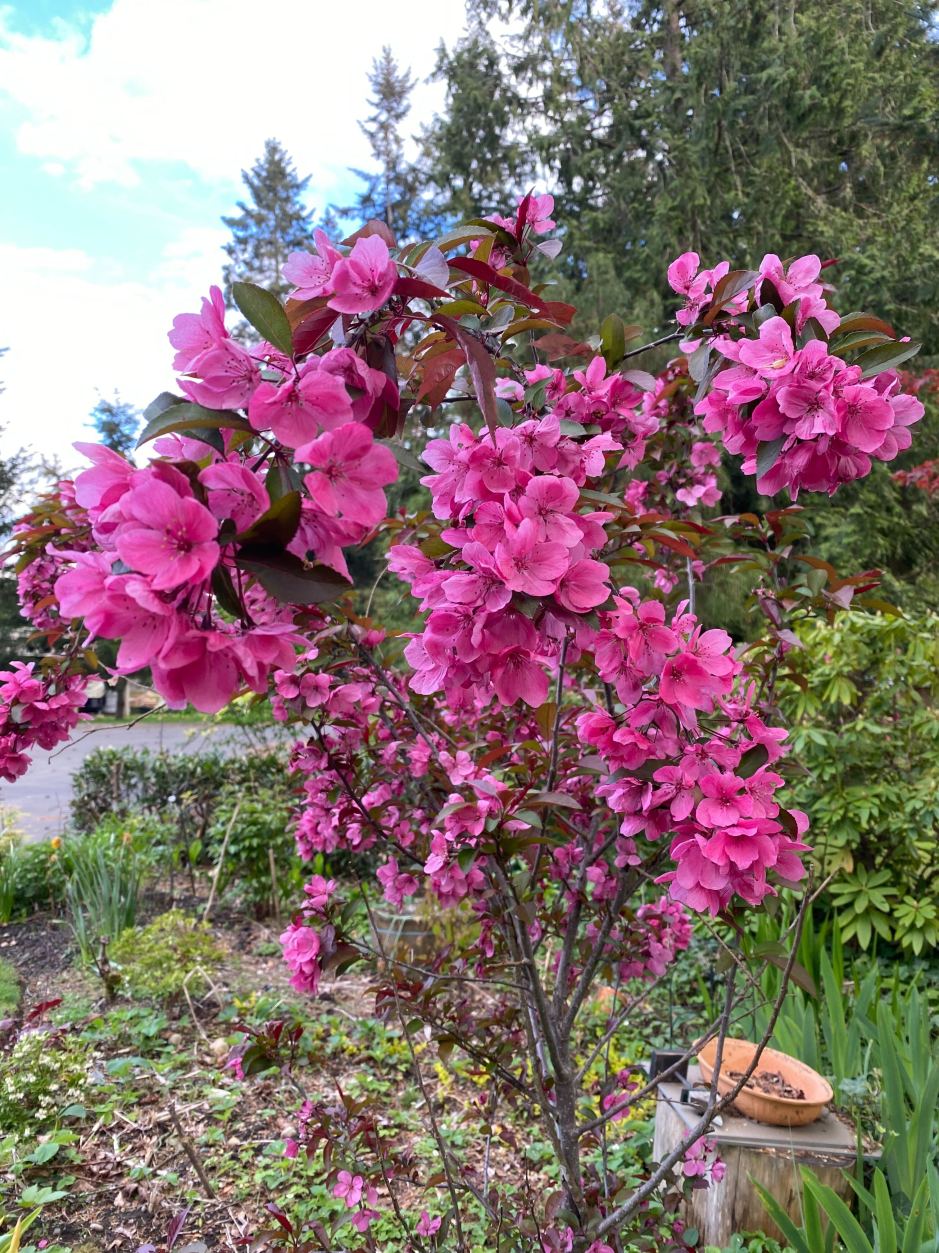
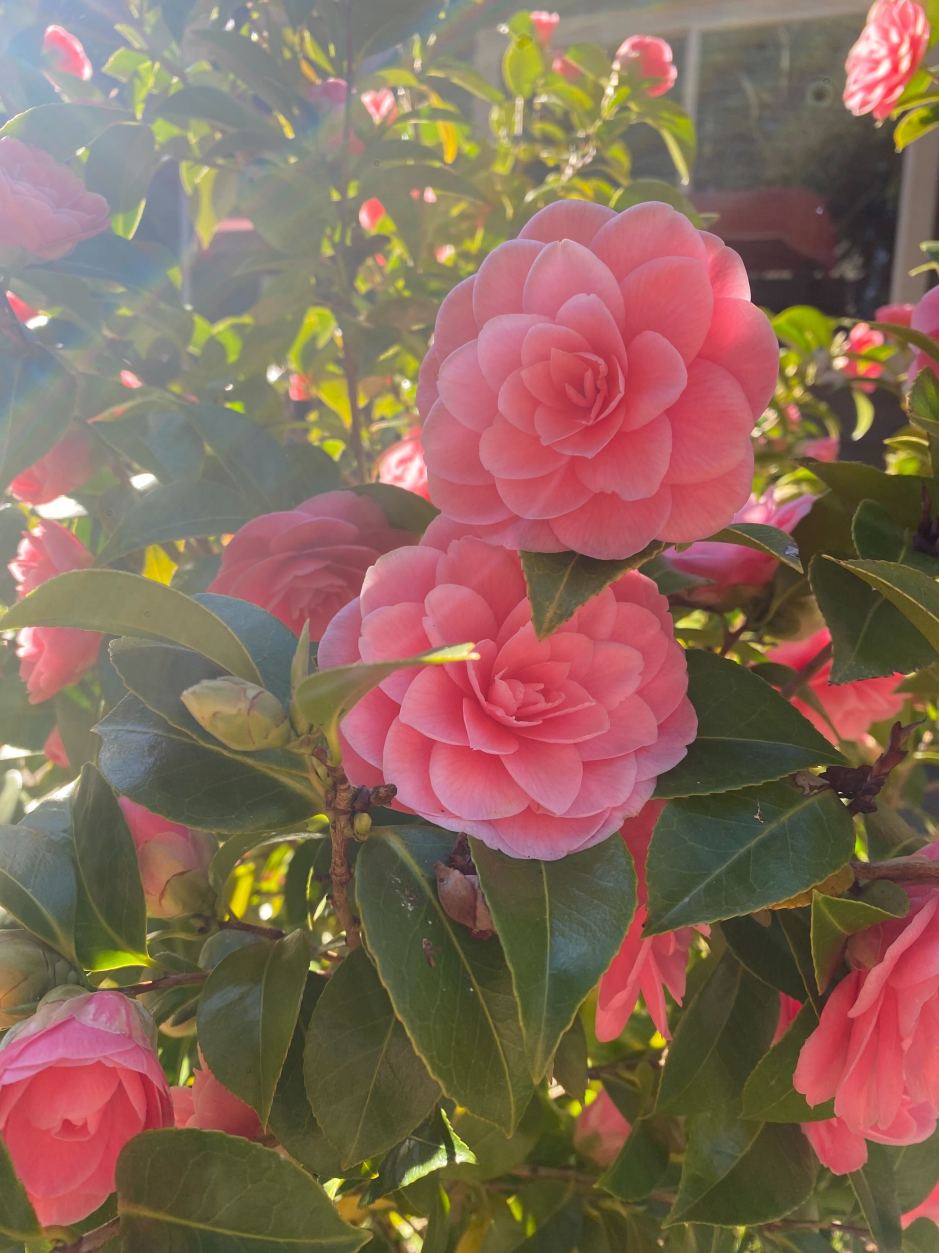
The garden has lots of flowers this time of the year. Every day some new spring flowering bulbs start blooming – hyacinths and daffodils are already glorious, but the Red Devon Daffodils which are the late blooming variety are just starting to bloom. I just love primrose “Wanda” which I have been growing for many years now. It forms a lovely border around my front flower bed. I also divide them and it is now beautifully flowering in other parts of my garden. The camellia tree has exploded with stunning flowers and the two Japanese Plum trees are also so full of flowers. The hellebores are still looking beautiful – I feel they are the longest blooming plants! The Red Currants (Ribes Sanguineum) are starting to flower and I can’t wait for the hummingbirds to start visiting her! That truly makes my day!

An interesting anecdote about one of my trees. A gardening friend had given me a small tree which was 12″ tall 6 years ago when she had given to me saying that it was a seedling of a plum tree. I planted the then tiny tree and it grew tall every year but did nothing else. It is now approximately 20 feet tall but was not producing any flowers or fruits. I was growing frustrated with this tree and thought I will remove it if there are no flowers or fruits this year. Well, guess what – this one has beautiful flowers now!! I asked the local gardening group and they identified it as an American plum. How exciting is that!! I am looking forward to observing what the tree does in the coming months and years. Hopefully I will get plums soon!

I wanted to increase the depth of the raised veggie bed from 2″ to 6″. Keshav helped me with this and now I am happy that the veggie bed is 6″ deeper. I filled this bed with raised bed mix and sowed peas and beets so far. I also sowed 6 peas in the barrel.

March is when I sow most seeds that I want to start indoors and so the number of seedlings I have to take care of indoors increases. I am always amazed that dahlia seeds germinate so fast!! 3 days after sowing, the seeds germinate and start growing!

Garden Chores this month:

  • Planted ranunculus and anemones in the front flower bed after pre-sprouting. They are still very small but growing well.
  • Started applying mulch after cleaning the dahlia bed.
  • Sowed dahlia seeds indoors which are now growing nicely under grow lights
  • Snapdragons, swiss chards, and beets seedlings are growing well too.
  • Tomato seedlings look so big and strong!

Highlights of the garden in March are captured in this video:

February in my PNW Garden

We rolled into February with hope for warmer weather and a pile of gardening chores. But first, it was so exciting to see the Iris Reticulata start to bloom as soon as the new month began!

Hellebore blooms are still going strong! Its amazing how long these lasts. I already cleaned up the older leaves, and the flowers look much better now – but still not as “flashy” as I would like. A little confession – though I appreciate the early blooms and the long lasting flowers, I am not sure that I love the hellebores too much. They remain very close to the ground and seem to disappear into the surroundings unless I peer close to them – even though I have 4 of them in my backyard. . They are expensive plants, so planting en masse is not an option for a thrifty gardener like me. I am on the look out for a very early blooming, deep shade plant that will lift the winter spirit.

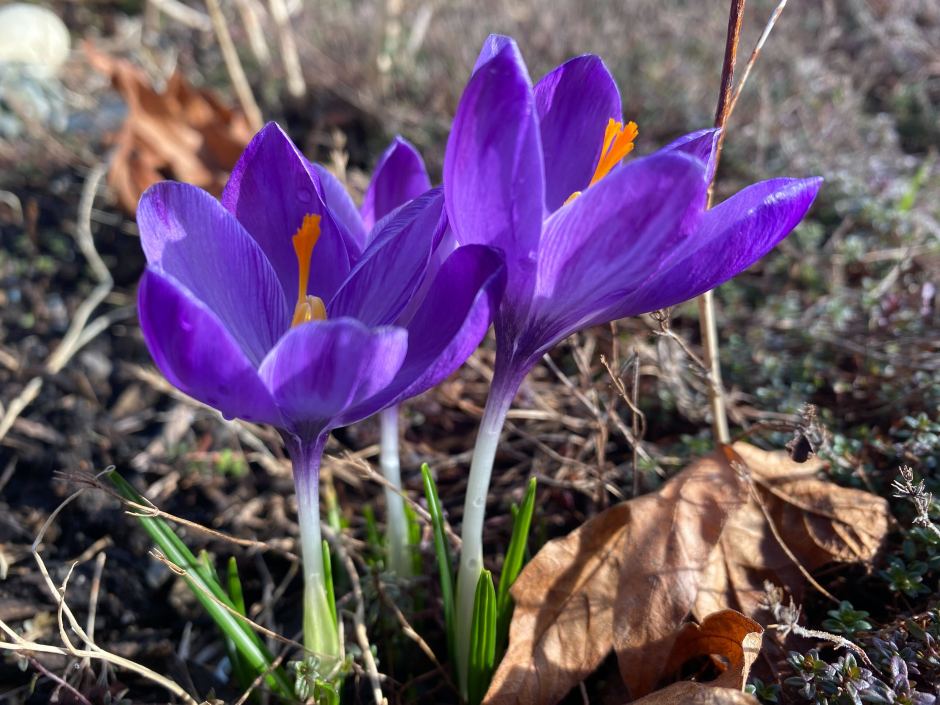
The crocuses have started blooming too! These are very attractive to rabbits, so I truly treasure the few that manages to bloom in the garden. The ones that I planted in pots are strangely still not blooming. There are a few daffodils starting to bloom but I am waiting for the main show. My favorite pink camellia has started to flower but then again, the full display is eagerly awaited. Same with Primrose Wanda – I overlook this hardy, beautiful primrose but it adds the pop of color just at the right time. I have them as a border in my front yard and also all around the garden.

On the house plant front, the Thanksgiving cactus is flowering again! I missed the flush of bloom during Thanksgiving time as I was vacationing in India, so I am thrilled to see some flowers now. The African Violets I bought last month are still in flower. So happy to see the long life of these beautiful flowers. I forced some forsythia branches to bloom indoors. I love the bright yellow flowers this time of the year which are also very appropriate for Saraswati Puja. If you want to know the process I use to force branches indoors, you can review my post on this.

The tomato seeds (Beefsteak variety) I sowed on 1/21 have germinated and doing well. They even grew tall enough and I repotted them into bigger pots. However, the pepper seeds (Hot Portugal variety) did not germinate. They seeds were very old and I think they were not viable.

Garden chores completed this month:

  • Cleaned up the two front yards.
  • The flower beds in the front yard now has nice, crisp edging – thanks to Anselmo who helped me with that.
  • Hydrangeas and roses pruned.
  • Hydrangeas fertilized.
  • Started the pre-sprouting process for Ranunculus and Anemones.
  • Sowed Swiss Chards seeds indoors on 2/6. Only one out of 6 germinated. I think I am wasting my time on the old seeds.
  • Spinach seeds sowed indoors on 2/6. No germination on this at all. I will try growing them as micro greens before discarding the seeds.
  • Sowed Apple Blossom Snapdragon seeds indoors on 2/27.

A short video encapsulating the February Garden is below:

The Amaryllis – getting them to bloom again!

Happy New Year to all. Wishing everyone peace, love and a joyful 2022.

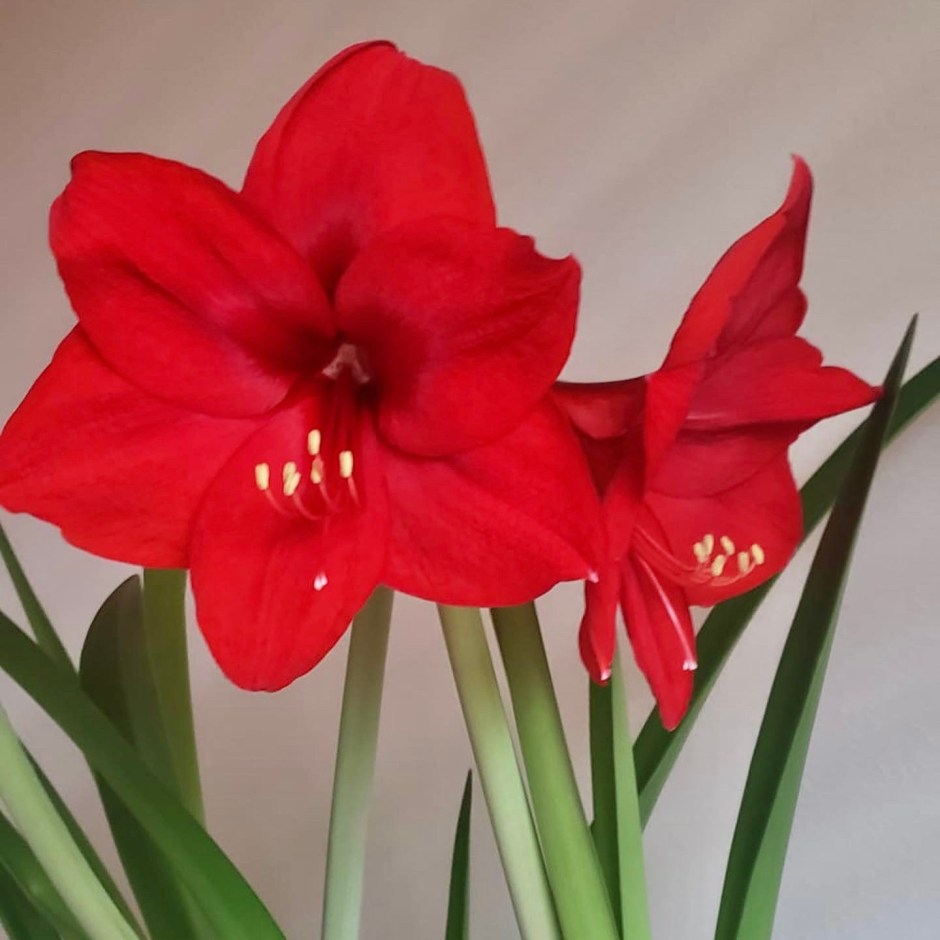
No other flower heralds the holiday season as much as the Amaryllis. I am not ashamed to admit that I have a fascination for these beauties! My day gets happier the day these blooms. But Amaryllises are expensive bulbs. It’s hard for me to discard them after they bloom and justify the cost of buying them every year. At the same time, they are so gorgeous that I can’t imagine not having Amaryllis. With a little bit of care, we can have the same bulbs bloom year after year.

I made a video earlier on how to plant the newly bought bulbs after they bloom. You can watch it here:

In the video below, I show you how these plants bloom after a period of dormancy.

Hope these videos are helpful to you. If you are growing Amaryllis and have any tips to share, please add them in the comment below.

Happy Gardening, friends!

Wandering Jew or Tradescantia Zebrina Plants

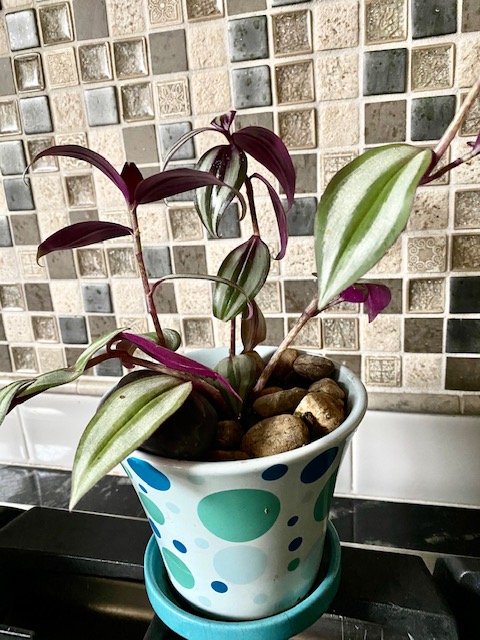
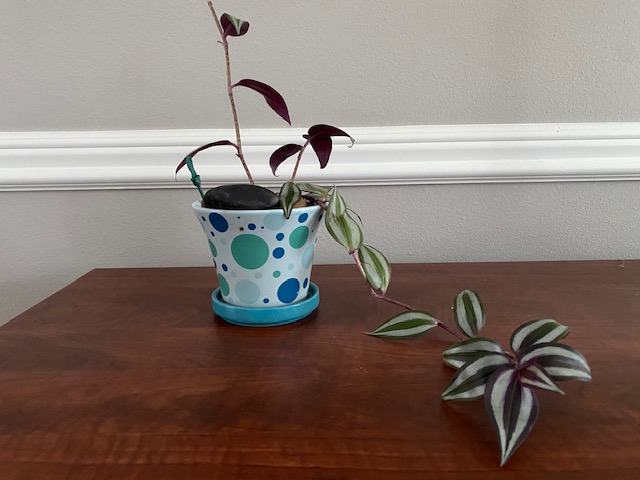
Tradescantia zebrina, also known as wandering jews or spiderworts, are beautiful vining house plants which has lovely shiny foliage with stripes of white, green, silver, and purple colors. They are very easy to care for and equally easy to propagate.

The optimum requirements for this plant to grow and flourish is minimal. Wandering Jew doesn’t like to dry out but it doesn’t like to be constantly wet either. I water my plant every 2 weeks in winter and about once a week in summer. This is because in winter the plant (like all plants) are dormant and not actively growing. I have my plant in my kitchen window which is north facing, so it doesn’t get any direct sunlight.

I have not faced any disease / issues with my plant so far but I heard that aphids might be a problem. If so, the recommendation is it snip off the affected leaves, stems if there is an aphid attack.

Which brings me to the most fun topic which is how easy they are to propagate. I got my plant as a single stem from a gardening friend who was trimming hers. I stuck it in some potting soil and off it went. In less than a month, I saw new growth which led me to believe that the “stem” has now rooted and is an established plant by itself. However, I wanted a more bushier look. So I snipped off half of the original plant and planted it in the same pot and, Voila! Another one rooted. I now have a bushier looking plant and come warmer weather, I am sure it will bulk up more with more leaves and growth.

Here is a video of me taking a cutting from my original plant for rooting:

Orchids Care and Repotting

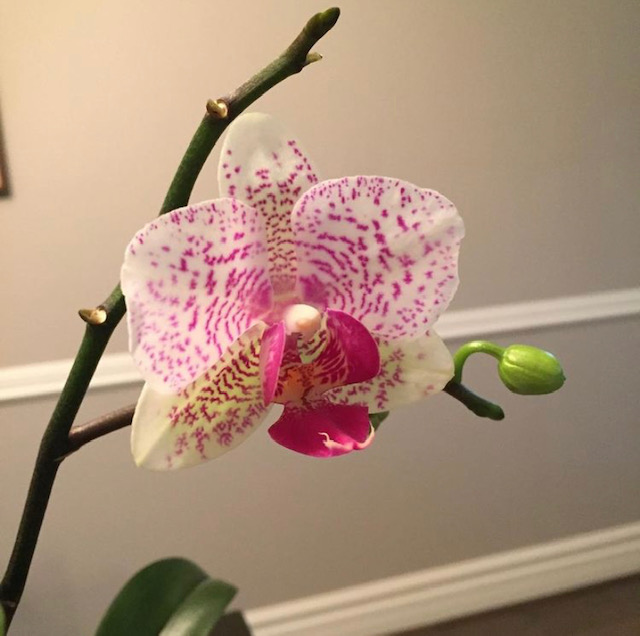
Orchids (Orchidaceae) are a very diverse family of plants which includes approximately 20,000 different species. While orchids are grown as natives in tropical climate, here in gardening zone 8b, it is a house plant. The most commonly grown houseplant orchid is of variety “Phalaenopsis“. It is also the easiest to take care of and blooms off and on throughout the year. They come in a lot of different colors. When in bloom, they look stunning and lasts for a long time.

While the orchids are easy to care for, they have certain needs that make them thrive. The repotting topic is the broadest and varies widely.

  • Light : The primary reason Orchids don’t flower is when they don’t get sufficient light. They need bright, indirect sunlight to bloom, but direct sunlight makes their leaves scorch. I usually keep mine in a south (or east) facing window sill during winter and a north facing window sill during summer.
  • Water: When someone tells me that their orchid died, I am almost certain that there was root rot involved. The orchids must NOT sit in water or their soft tender roots will rot. I water them thoroughly once a month and that is sufficient in our humid Seattle weather. The clear indication that the orchid are healthy comes from their roots. Bright green roots tell us that the orchid has sufficient water, when the root turns brown, it is telling us that the orchid lacks moisture and when they are slimy silvery color, the root rot has set. If in doubt, it is better to under water than over water. It is very hard to recover a plant if the root has started to rot. In this context, it is worth mentioning that the reason why orchids should never be planted in a potting mix or soil is because they hold on to too much moisture and the roots will rot in a matter of weeks.
  • Feeding: I do not give any fertilizers to any of my indoor plants including Orchids and they have not complained thus far.
  • Repotting: Orchids are usually sold potted in a special orchid potting mix which is very “airy”. They usually consist of bark, charcoal, sphagnum moss and contains minerals to help the orchids grow. I only repot my orchid every 3/4 years unless they show signs of distress, if bark or potting mix has broken down, or if the plant “pushes” itself up and out of the pot. To re-pot, take the plant out of the planter, and remove all the bark/mix from around its root. This is a good time to cut off dead or diseased roots. Only keep the roots that are green and plump. Then replant the orchid with fresh orchid potting mix. One thing to remember here is to make sure that the pots have a lot f drainage hole/slats. Usually the clear plastic pots that the orchids are sold in are the best pots for growing orchids. But they can also be grown in more aesthetically pleasing glazed or terracotta pots provided they have at least a few holes/slats to allow for water to drain and light to reach the roots. The Orchid roots have chlorophyll which means the roots can also photosynthesize and add energy to the plant. The plant will still survive if the roots do not get sunlight as the leaves also adds energy by photosynthesis. Most orchids prefer shallow squat pots as their roots don’t like the moisture retained in the deep pots and they don’t need the depth anyway as the roots spread out, not down. As far as the timing of repotting goes, it can be repotted any time of the year. However, it is best to repot after a flush of bloom so that there is no loss of the prized blooms. There is also an option of skipping the entire orchid potting mix and letting the orchids grow in water. Since I have no experience growing orchids using that method, I am skipping that here. There are plenty of literature available online if you want to explore that option.

You can watch the process of repotting orchids, while I do mine.

Repotting Orchids

My green house mates

I want to start this post by providing a disclaimer that I am less enthusiastic about growing plants indoors than I am about growing them out in my yard. I mostly grow plant indoors for the aesthetic they bring in my home decor and I use them for styling spaces. Thats also the reason I struggle to find the plants that fits into the conditions where I want to have them. A “plant room” concept doesn’t appeal to me – yet! I have learnt that how I decorate a room has evolved over time and I am not going to predict that I will never take a liking to a room for my plants only. I also like to style the indoor plants in containers which go with my current decorating style. I change these containers as per season and as often as my mood strikes.

This pothos is very special to me and has lived with me for more about a decade. She was a gift from a gardening friend in when I was not sure I could take care of a house plant. She gave it to me with the reassurance “you can’t kill her” and I am happy to report that I have proved her right 🙂

The planter is also special and a handmade wooden one from Indonesia. I bought her when we moved into our first house in 2006. She is absolutely gorgeous and holds a place of pride in my living room.

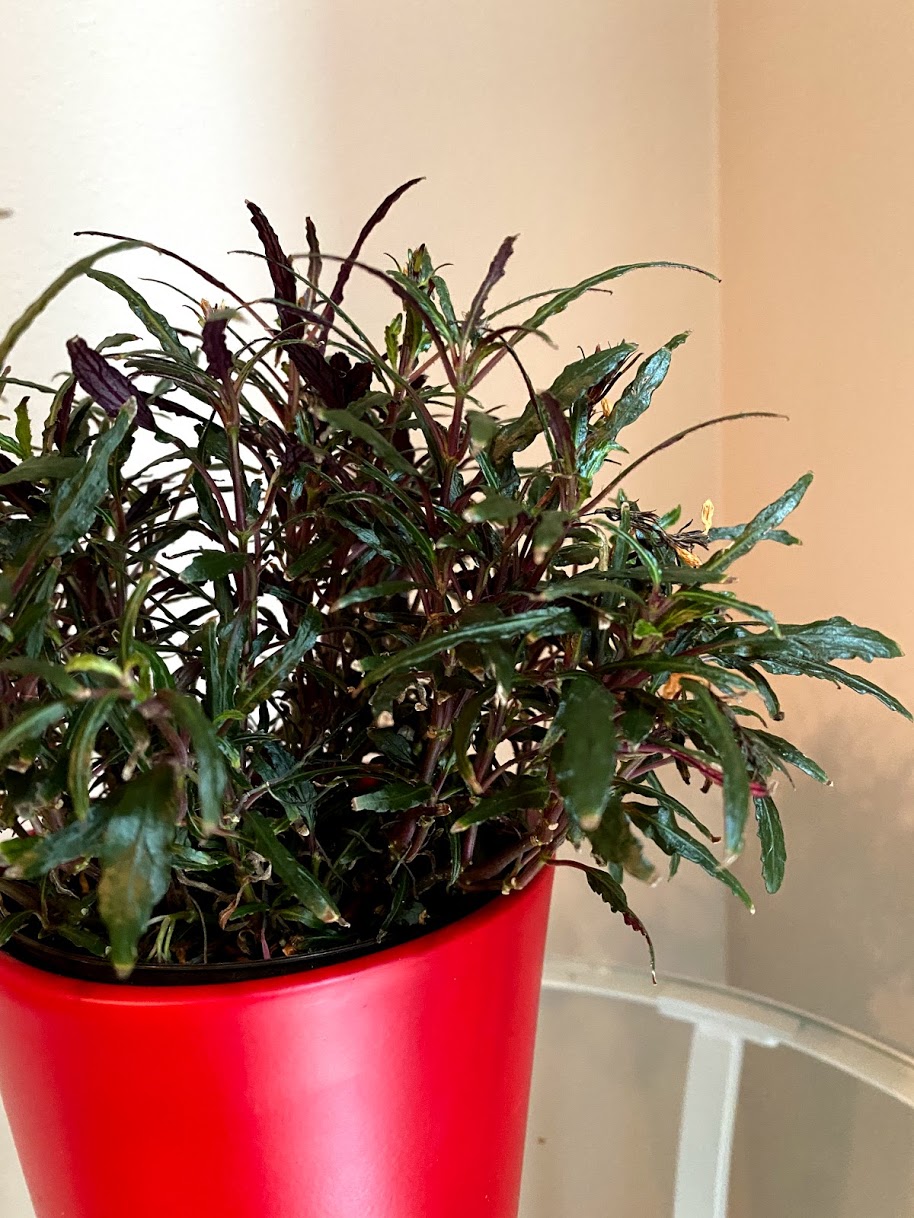
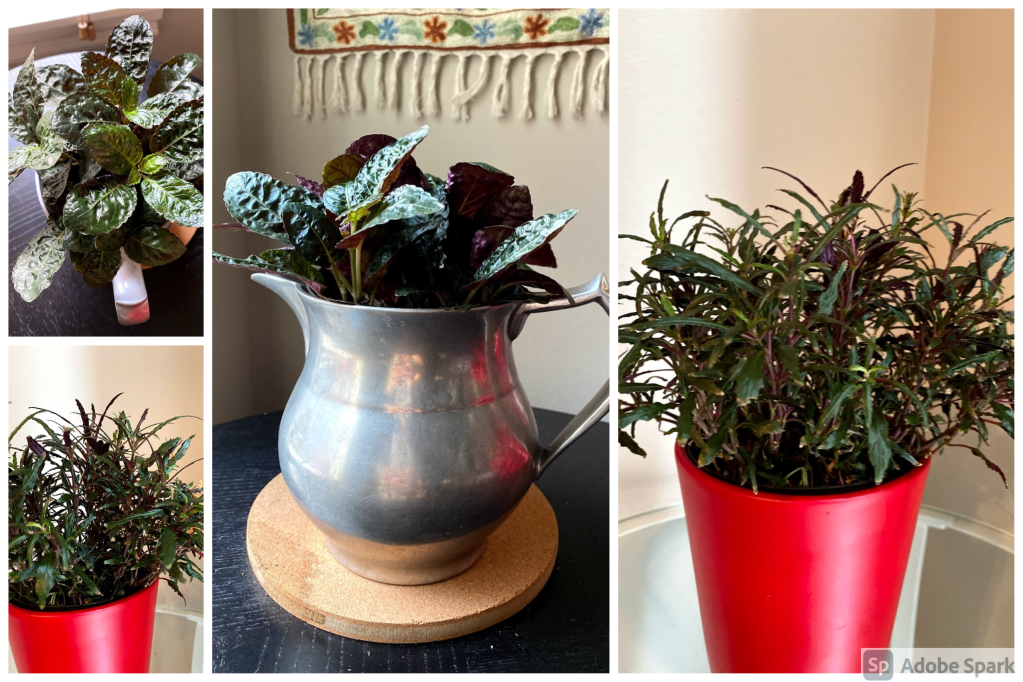
These Angel Plants are newly acquired. I enjoy the gorgeous foliage of these lovely plants. The one in red pot is called the Dragon’s Tongue. The foliage is grass-like, wispy and purplish green. The pot itself is recycled from an Orchid that I had once owned.

The one in the pewter pitcher is called “Purple Waffles” angel plant. I love the crinkled edge foliage of this plant. The pitcher is from my collection of water jugs.

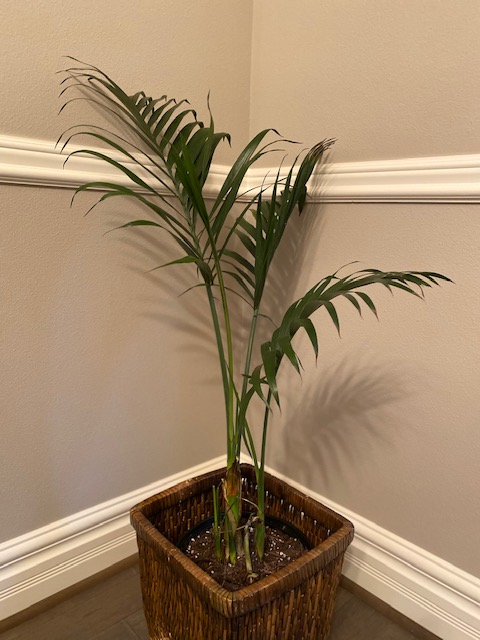
I “rescued” this palm recently from the clearance rack. It was suffering from very dry soil, there were multiple dried/dead fronds and the foliage also had hard water residue. I cut off the dead stalks, cleaned the foliage with neem oil and watered thoroughly. Approximately 3 weeks later, I can see a fresh new frond opening. It is beautiful and for now in a beautiful basket I already had at home. Thrifty tip of the week – always check the clearance racks when you shop for new plants.

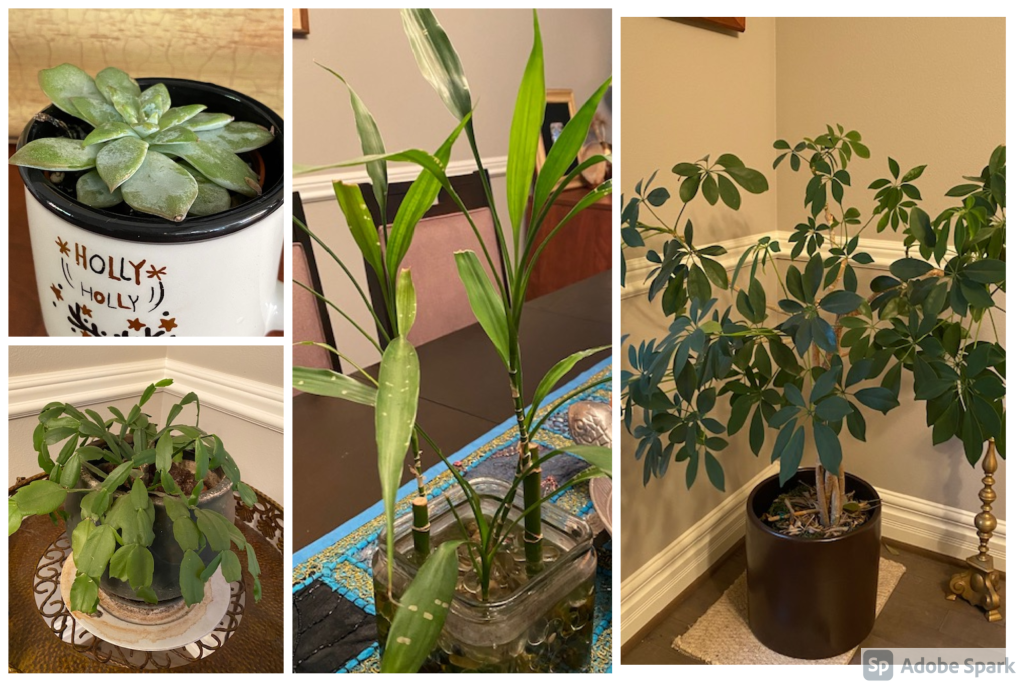
The other plants I have around me indoors are a few succulents (echeverias), a couple of Christmas cacti, bamboo and a gorgeous umbrella plant. The echeverias are housed in smaller containers like this lovely season appropriate espresso mug. The two Christmas cacti are more than a decade old and blooms in all but the Christmas season. The flowers are pink and very dainty. The bamboos live in container filled with water in my dining table and the umbrella plant is in a corner of my dining room.

I have few other plants around the house like spider plants, snake plant (aka Mother-In-Laws tongue), Dracaenas and bromeliads. They blend into the background without trying to hog attention – just as I like all my house plants to do. One thing to add, I never feed/fertilize my house plants. I do change the soil every 3/4 years and give them fresh potting mix to enjoy. They all sit close to a light source (window sills, sky light) and I water them sparingly (once a month) during the winter and more often (at least twice a month) during the summer.

Hope you enjoyed seeing some of my house plants. Let me know if you did and tell me what you enjoy growing in your house?